In short
- Use both hands, keep eyes up, add pressure step by step.
- Start every drill with the weak hand.
- Partner drills teach passing; no-dribble games teach when to pass.
- Ten minutes of ball handling is a good warm-up.
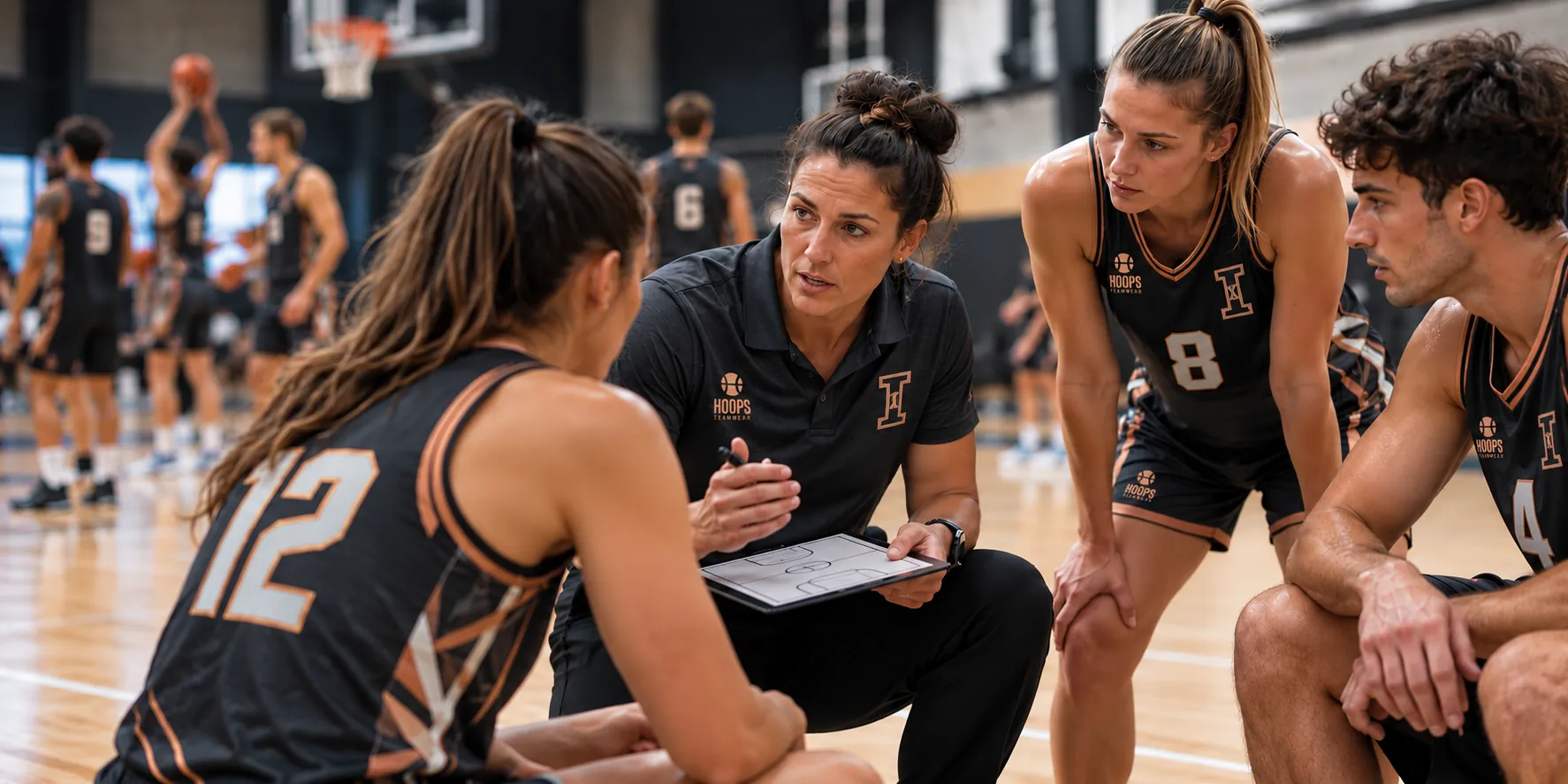
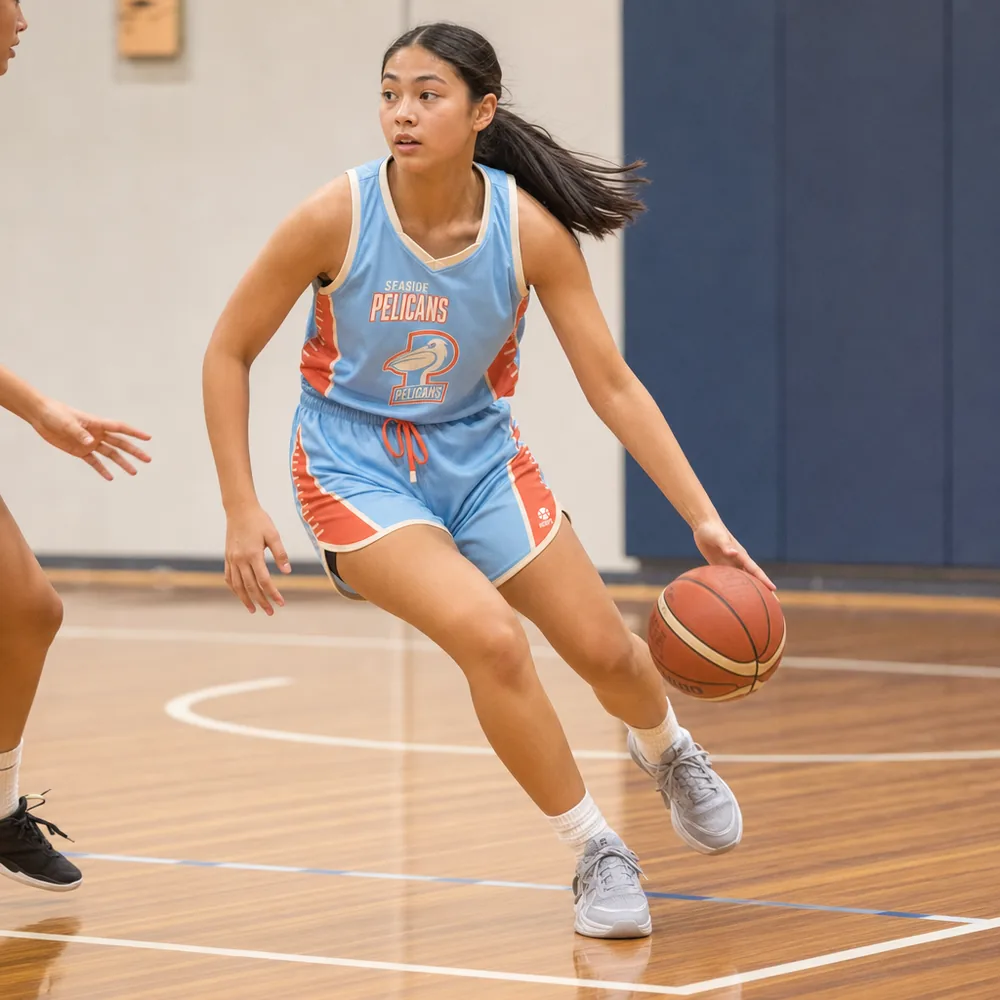
Good dribbling and passing drills make players use both hands, keep their eyes up, and handle the ball under pressure. Start with stationary ball handling, add movement with cones, then add a defender. For passing, partner drills teach the technique and small-sided games teach when to pass.
Here are five dribbling drills and five passing drills, from beginner to advanced.
Dribbling basics
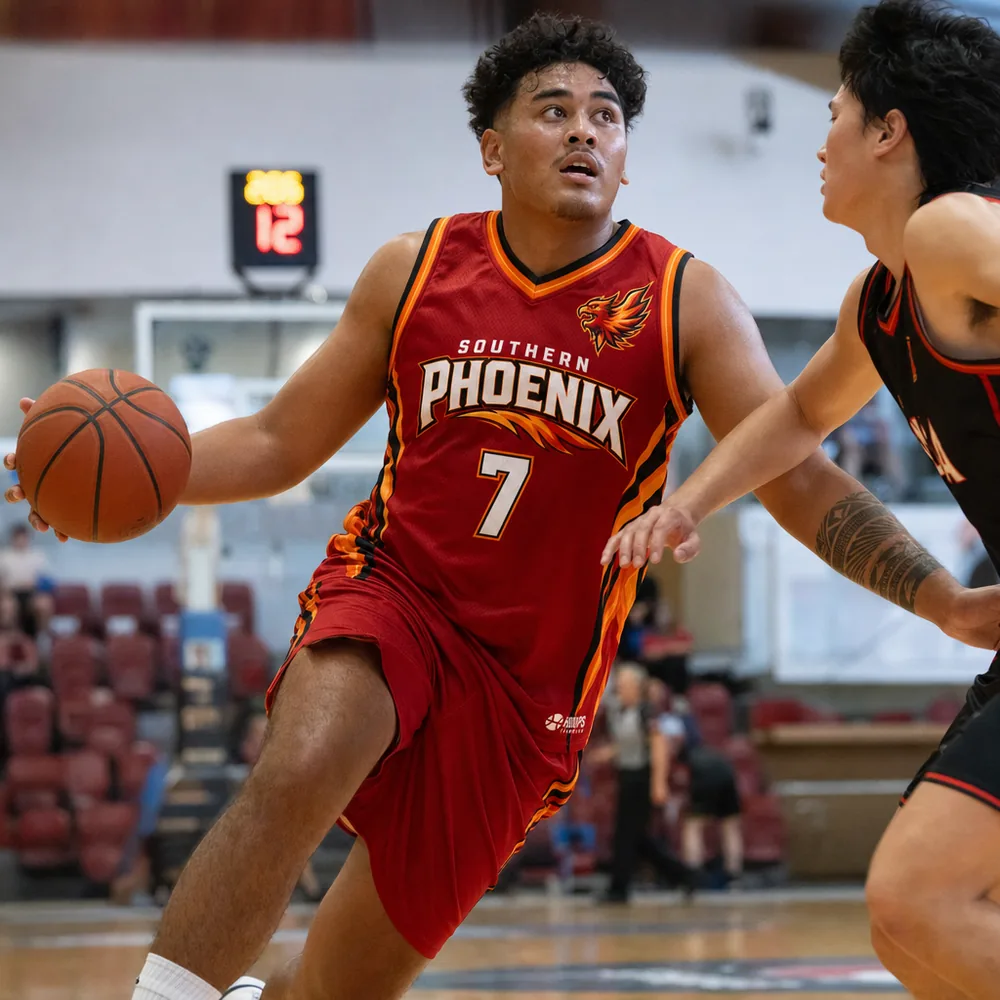
- Use the fingertips, not the palm
- Keep the ball at or below the hip
- Eyes up: you can’t see a teammate if you’re watching the ball
- Protect the ball with the off arm and body when a defender is close
Dribbling drills
1. Stationary pound dribbles
Set-up: Every player with a ball, in a space.
Thirty seconds each: hard right-hand dribbles, left-hand dribbles, crossovers in front, between the legs, behind the back. Call out a number of fingers and players shout it back, to keep their eyes up.
Focus: Hard, low dribbles, eyes up.
2. Two-ball dribbling
Set-up: Each player with two balls.
Dribble both together, then alternate, then one high and one low. It’s hard, and it makes the weak hand work.
Focus: Weak-hand control.
3. Cone weave
Set-up: Six cones in a line, two metres apart.
Weave through using a crossover at each cone, then come back with between-the-legs or behind-the-back changes.
Focus: Changing hands without slowing down.
4. Speed and control
Set-up: Baseline to baseline.
Speed dribble (ball pushed out in front) to half way, then control dribble (low, protected) to the other end. Back with the other hand.
Focus: Changing pace.
5. Dribble knockout
Set-up: Everyone dribbling inside the key or a circle.
Players try to knock other players’ balls out while keeping their own. Out players do ball-handling at the side, then rejoin.
Focus: Protecting the ball under pressure.
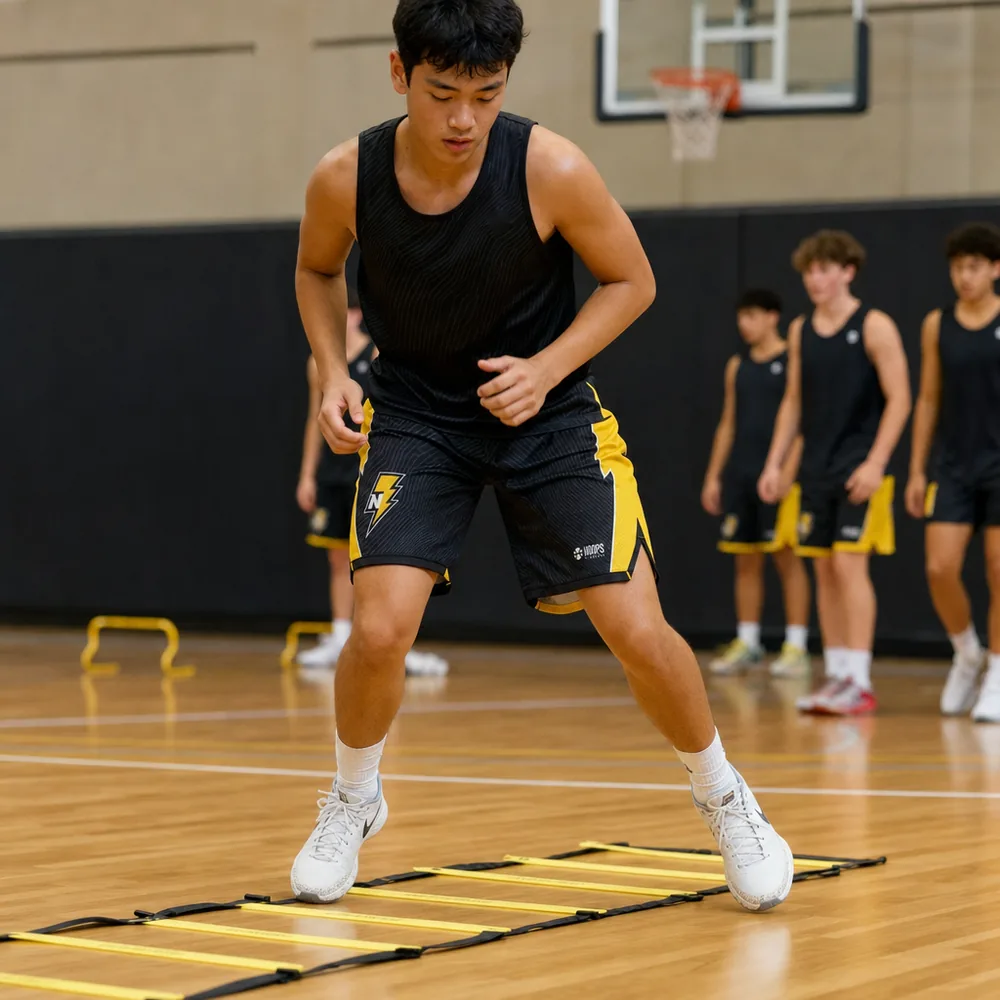
Passing basics
- Chest pass: step towards your target, thumbs finish pointing down
- Bounce pass: bounce it about two-thirds of the way to your teammate
- Overhead pass: over a defender, or to start a fast break
- Pass to the hand away from the defender, and call your teammate’s name
Passing drills
1. Partner passing
Set-up: Pairs, three to four metres apart.
Ten chest passes, ten bounce passes, ten overhead passes. Then a race: most passes in 30 seconds.
Focus: Stepping into the pass.
2. Star passing
Set-up: Five players on the points of a star, two balls.
Pass across the star, never to the player next to you, then follow your pass to that spot.
Focus: Passing and moving.
3. Monkey in the middle
Set-up: Groups of three: two passers, one defender.
Passers can pivot but not dribble. The defender tries to touch the ball. Swap after a touch or 30 seconds.
Focus: Pivoting and fake passes.
4. Three-player weave
Set-up: Three lines on the baseline.
Middle player passes to a side and runs behind them. Keep weaving to the other end and finish with a layup, no dribbles.
Focus: Passing on the run.
5. 3 v 3, no dribble
Set-up: Half court, three on three.
Teams can only pass. A score needs a layup after at least three passes.
Focus: Moving to get open, and deciding where to pass.
Putting it into a session
Ten minutes of stationary ball handling makes a good warm-up. Add one moving dribbling drill and one passing drill, then finish with a no-dribble game so players use what they practised.
For shooting, see basketball shooting drills. For a full session plan by age, see basketball drills for kids. Splitting a squad for games? Training reversibles make two teams in seconds.