In short
- Numbers 0, 00 and 1–99, no duplicates, plain and contrasting.
- FIBA minimums are 16 cm back, 8 cm front; some leagues use 20 cm and 10 cm.
- Undershirts: tight, black, white or the singlet colour, same for the team.
- Domestic competitions are usually more relaxed. Check your by-laws.
Most Australian basketball competitions follow the FIBA Official Basketball Rules, with local by-laws on top. In short: numbers 0, 00 and 1 to 99, no duplicates in a team, plain numbers that contrast with the singlet, singlets and shorts in the same dominant colour, and tight undershirts in black, white or the singlet colour. Junior and domestic competitions are usually more relaxed than leagues.
Here’s what the rules say, where Australian leagues differ, and what gets checked before tip-off.
Who sets the rules
FIBA writes the Official Basketball Rules, and Basketball Australia adopts them. State bodies such as Basketball Victoria and Basketball NSW, and each local association, then add by-laws for their own competitions. That’s why a rep team in a state league and a domestic under-12 team can have different uniform rules.
The rule that matters is the one in your competition’s by-laws. Check them before you order.
Numbers
- Allowed: 0, 00 and 1 to 99. 0 and 00 count as different numbers.
- No duplicates within a team.
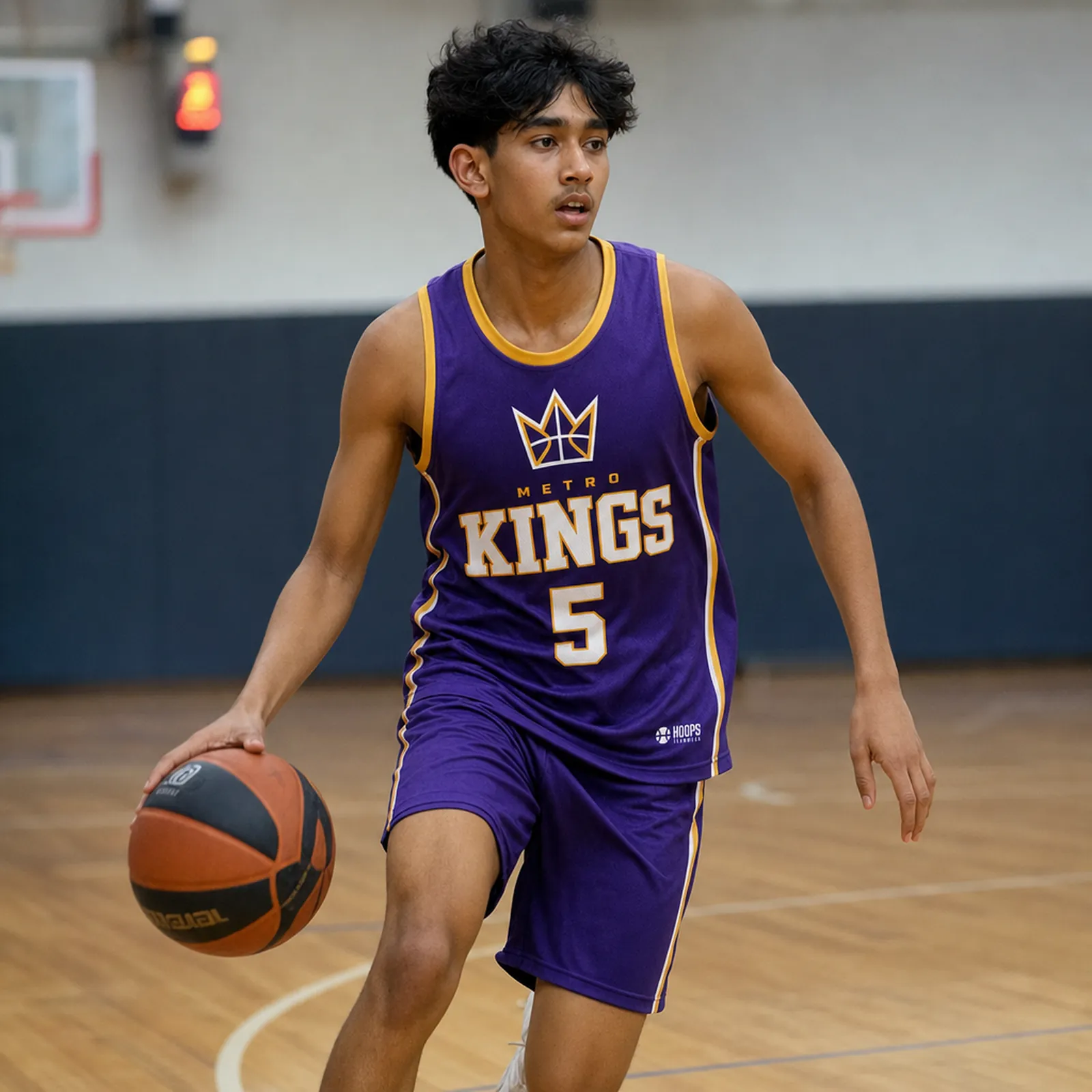
- Plain and solid, in a colour that clearly contrasts with the singlet. No patterned or gradient numbers.
- Front and back, in leagues. Many domestic competitions only require a back number.
Some older junior by-laws still limit numbers, for example to 4 to 15. Check before you collect numbers from players.
Number sizes
| Rule | Back | Front | Stroke width | Logo gap |
|---|---|---|---|---|
| FIBA (from 2022) | 16 cm | 8 cm | 2 cm | 4 cm |
| Basketball Victoria leagues | 20 cm | 10 cm | 2 cm | 5 cm |
| Many domestic competitions | Readable from 10 m | Often optional | — | — |
| What we print | 20 cm or more | 10 cm or more | 2 cm or more | 5 cm or more |
FIBA reduced its minimum sizes in 2022, but many Australian leagues still use the older 20 cm and 10 cm. We print to the larger sizes, so uniforms pass either rule.
Leagues and domestic competitions
Basketball Victoria’s uniform policy is a good example of how the rules differ by level:
| Feature | Leagues | Domestic |
|---|---|---|
| Numbers | 0, 00 and 1–99, front and back | Back number readable; front often optional |
| Singlet and shorts | Same dominant colour, front and back | Often don’t have to match |
| Sets of singlets | Light and dark sets | Often one set is enough |
| Undershirts | Tight, black, white or the singlet colour, same for the team | Usually more relaxed |
| Socks | Same dominant colour for the team | Usually not checked |
Other states and associations set their own versions, so treat this as a guide and check your own competition.
Singlet and shorts colours
In leagues, singlets and shorts must share the same dominant colour, front and back. Teams need a light and a dark set: the home team (first-named) wears light, preferably white, and the visitors wear dark. A reversible singlet covers both. See reversible basketball singlets.
Under FIBA rules, singlets are tucked in, sleeves end above the elbow and shorts end above the knee.
Undershirts and compression wear
- Must be tight-fitting
- Black, white or the singlet’s dominant colour
- The same colour for every player on the team
- No loose t-shirts under singlets, and no bright logos or patterns
Arm and leg compression sleeves, headbands and wristbands follow the same rule in leagues: one solid colour, the same for the whole team.
Socks and shoes
FIBA’s rules from 1 October 2026 only ask that a team’s socks share one dominant colour. The earlier rule that socks must be visible has gone. Shoes can be any colour, but no flashing lights or reflective material. Many domestic competitions don’t check socks or shoes at all. Want socks that match? Ask about our playing socks.
Names and logos
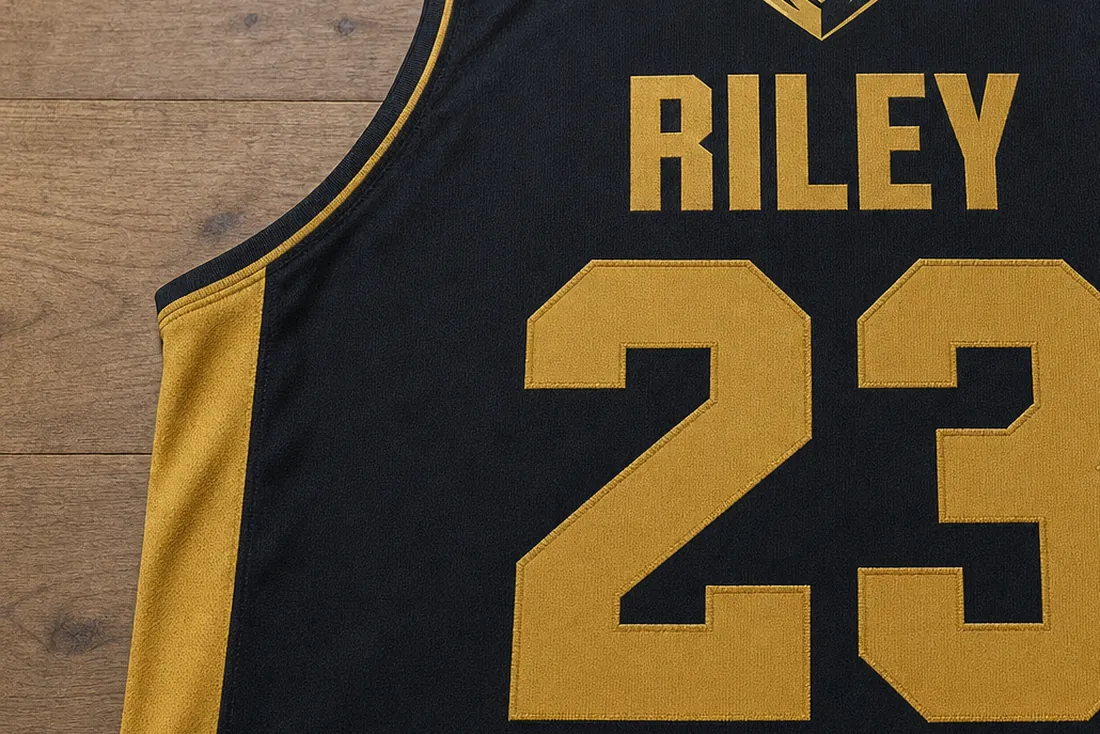
Player names usually go above the back number. Most associations allow them, but some junior competitions don’t, or limit the lettering size.
Logos and sponsors need to sit clear of the numbers: 4 cm under FIBA rules, 5 cm in some leagues. Players can’t wear commercial logos on their body or hair. See how to get sponsors on your club uniform.
What happens on game day
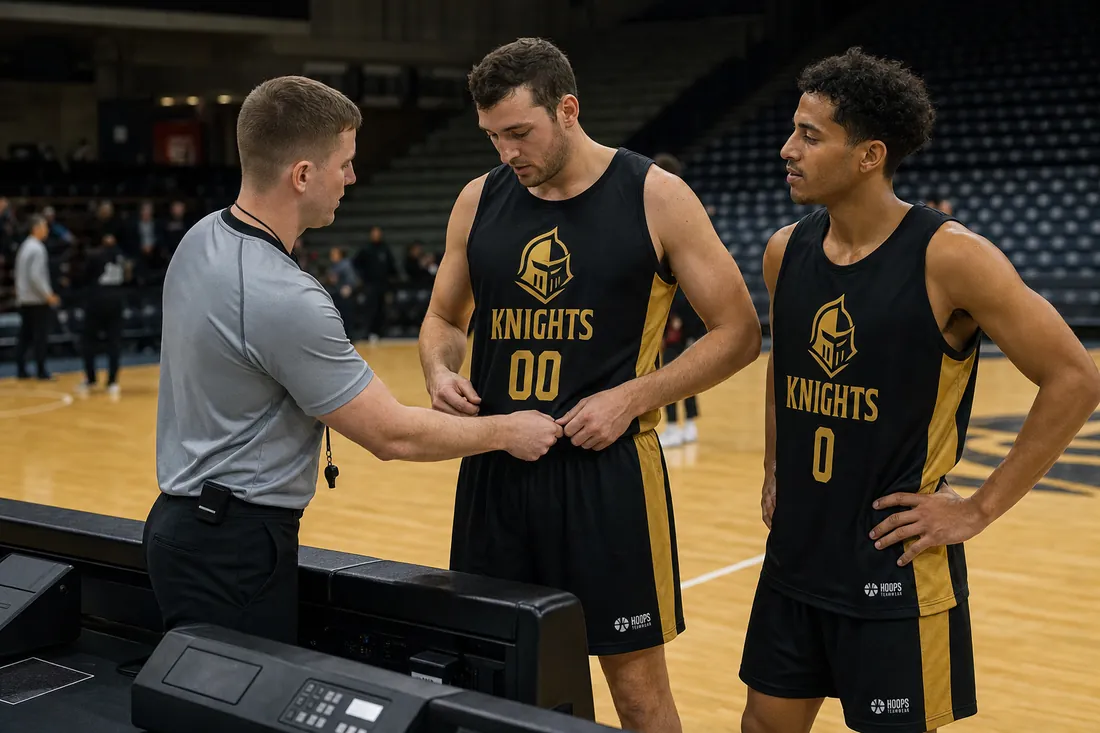
If a uniform breaks the rules, officials usually ask the team to fix it before tip-off. In leagues, a player who can’t fix it may still play, but the club can be fined after the game. Repeated breaches cost more, so it pays to get it right at the proof.
Sources
- FIBA Official Basketball Rules 2024, Article 4 (Teams), and the 2026 rule changes, valid from 1 October 2026
- Basketball Victoria, BV Leagues Uniform and Undergarment Regulations
- Basketball Victoria, Uniform Policy: Leagues and Domestic Competitions
Rules change, so always check the current version with your association.